The listing conversation is built around evidence that challenger brands, by definition, do not have. Buyers ask for rate of sale, repeat rates, and performance in comparable retailers, and a challenger at the start of its retail life can answer none of it. The result is a circular problem: you need the listing to generate the data, and you need the data to win the listing.
Most challengers respond by borrowing whatever evidence is closest to hand, whether that is direct-to-consumer sales, social traction, or a strong farmers' market weekend. Buyers discount all of it, not out of unkindness but because none of it predicts how the product behaves on their shelf, in their category, against their shoppers.
The honest answer to the evidence gap is not louder conviction, it is better evidence, and specifically evidence about the future rather than the past. A buyer does not actually need your sales history. They need a credible forecast of what your product does to their category: where its volume comes from, whether it recruits new shoppers or cannibalises existing lines, and what it adds to category value.
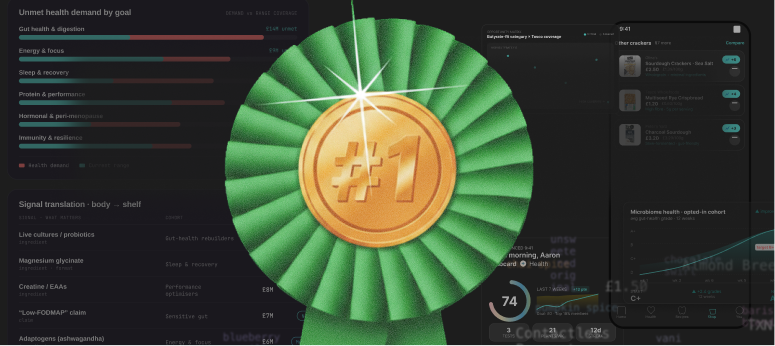
That forecast can now be modelled rather than waited for. Breakthrough's predictive infrastructure simulates how a product performs in a specific retailer's category grounded in what shoppers do next, drawing on behavioural intelligence from real shoppers rather than the sales history a challenger has not yet had time to build. The output is the evidence a buyer conversation actually turns on: predicted demand, sourcing of volume, and the incremental case for the category.
This changes what a challenger brings into the room. Instead of asking the buyer to take a bet on conviction, you hand them the analysis they would have run themselves if the data existed, and you shift the conversation from "prove you have sold" to "here is what happens when you range us". The same modelling then carries past the listing into range development and content decisions, so the evidence base grows with the brand rather than trailing behind it.
A sales history takes years to build. Compelling data that influences buyers doesn't have to.